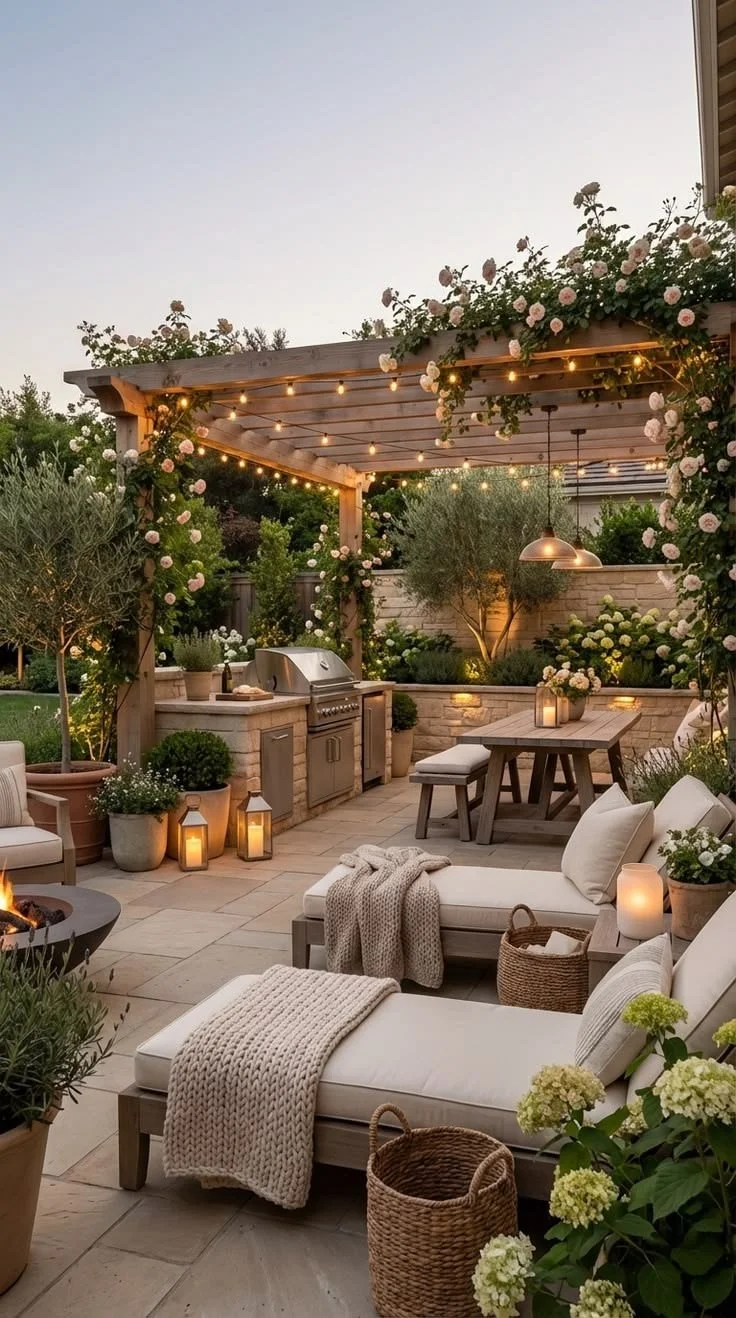
Making Your Backyard an Extension of Your Home

A backyard can support daily life as comfortably as any room inside the house. Clear pathways, comfortable furniture, and a few well-planned amenities can turn an underused lawn or patio into a place for meals, conversation, and quiet afternoons. The best outdoor living spaces also reflect the home’s architecture and the people who live there, so they feel connected instead of added as an afterthought, which is a key consideration when planning outdoor spaces.
Blurring Indoor and Outdoor Spaces
Start with the doorway between your home and yard. Glass doors, consistent flooring colors, and an unobstructed view can create a strong visual connection even when the doors are closed. These indoor-outdoor living ideas show how repeated materials and generous openings help unite the two areas.
You can get a similar effect without remodeling. Place outdoor seating where it’s visible from an adjoining room, then repeat an interior accent color in cushions or planters. A runner inside and a coordinating outdoor rug beyond the door can also establish a natural line of movement. For more ways to connect the two settings, explore this guide to making an outdoor space feel like an extension of your home.
Designing Functional Outdoor Rooms
Give each part of the yard a clear job before choosing finishes or furniture. A dining area belongs close to the kitchen, while a reading corner may work better beneath a tree or along a quiet boundary. Allow at least three feet around dining furniture so guests can pull out chairs and move comfortably.
Larger properties often need more structure to keep open space from feeling disconnected. Features such as terraces, covered seating areas, water elements, and defined paths can guide movement while creating distinct destinations. Homeowners considering luxury property landscape upgrades should first identify how they entertain, relax, and travel between key areas of the property. That practical plan helps every major feature serve a purpose.
Furnishing Your Exterior Living Areas

Choose outdoor furniture according to how often you’ll use it and where you can store it during harsh weather. Powder-coated aluminum is lightweight and resists rust, while teak develops a soft gray finish if left untreated. Performance fabrics make sense for cushions because they handle moisture and sun exposure better than standard indoor textiles.
Scale matters too. A large sectional can overwhelm a narrow deck, while two lounge chairs and a small table preserve walking space. In an open yard, a generous dining table may help anchor the area. Useful outdoor room planning tips can help you think through shade, furniture placement, and year-round comfort. Before buying anything, mark each item’s dimensions on the ground with painter’s tape.
Adding Personal Touches Outside
Outdoor rooms feel more welcoming when they carry details from the rest of your home. If your interiors feature warm wood, blue accents, or simple geometric patterns, repeat one or two of those elements outside. Coordinating every surface can feel rigid, so leave room for plants and weathered materials to add natural variation.
Lighting has an especially strong effect after sunset. Use low path lights for safe movement, wall-mounted fixtures near doors, and soft overhead lighting above dining areas. Planters can provide another personal layer. Group containers in odd numbers and vary their heights, but choose plants with similar light and watering needs. A washable outdoor pillow, a small side table, and a basket for blankets can finish a quiet corner without cluttering it.
Your backyard will feel connected to the house when daily routines flow easily between them. Keep the route from the kitchen to the dining table clear, place a comfortable seat where you naturally pause, and turn on the outdoor lights before dusk. Those practical details are what make the space part of home life.